
We are Reader-supported: We earn commissions through links at no extra cost to you. Details.
Apple Vision Pro 2 Launch:
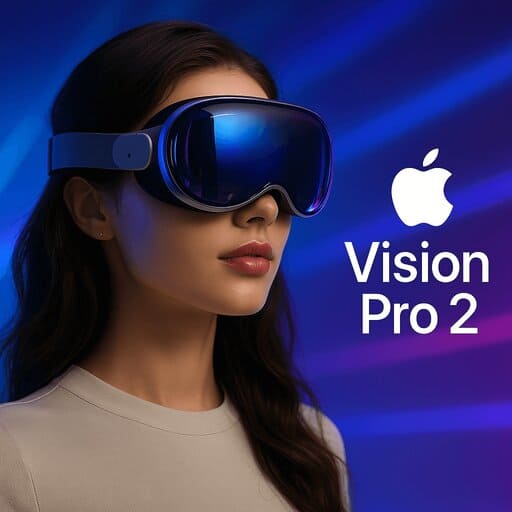
Apple’s journey into spatial computing took a bold leap with the original Vision Pro, and now all eyes are on the highly anticipated Apple Vision Pro 2 launch. While Apple hasn’t officially announced the next generation of its mixed reality headset, credible reports and industry insiders paint an exciting picture of what’s coming. This comprehensive guide explores everything we know about the Apple Vision Pro 2 launch, from expected features to market implications.
Table of Contents
The Current Vision Pro Landscape: Setting the Stage
Before diving into Apple Vision Pro 2 launch expectations, it’s crucial to understand where Apple’s mixed reality journey stands today. The original Vision Pro, launched in February 2024, has had a mixed reception in the market. Despite its groundbreaking technology and premium build quality, sales figures tell a complex story.
According to market analysts, Apple sold approximately 500,000 Vision Pro units by the end of 2024, falling short of the company’s initial projections of 800,000 to 1 million units. The $3,499 price point proved to be a significant barrier for mainstream adoption, with many consumers waiting for more affordable alternatives or improved second-generation models.
However, these numbers don’t tell the complete story. The Vision Pro has established Apple as a serious player in the mixed reality space, with developers increasingly creating visionOS applications and enterprises beginning to explore spatial computing solutions. This foundation sets the stage for a potentially more successful Apple Vision Pro 2 launch.
Apple Vision Pro 2 Launch Timeline: When to Expect the Next Generation
Industry experts and reliable sources suggest the Apple Vision Pro 2 launch window falls between fall 2025 and spring 2026. This timeline aligns with Apple’s typical product development cycles and allows sufficient time for meaningful hardware improvements.
Mark Gurman from Bloomberg, known for his accurate Apple predictions, has indicated that the Vision Pro 2 could debut during this timeframe. The extended development period suggests Apple is taking lessons learned from the original Vision Pro to heart, focusing on addressing user feedback and market demands.
Several factors influence this timeline:
Manufacturing Complexity: The Vision Pro’s sophisticated display technology and precision manufacturing requirements mean Apple needs adequate time to scale production for a potentially larger market.
Component Availability: The next-generation M5 chip expected to power the Vision Pro 2 is still in development, with production schedules affecting the overall launch timeline.
Market Positioning: Apple appears to be taking a measured approach, ensuring the Apple Vision Pro 2 launch addresses the criticisms and limitations of the first generation.
Expected Features and Improvements in Vision Pro 2
The Apple Vision Pro 2 launch promises significant improvements over its predecessor, addressing many of the concerns raised by early adopters and reviewers. Here’s what industry sources and credible rumors suggest:
Enhanced Processing Power with M5 Chip
The most significant upgrade expected in the Apple Vision Pro 2 launch is the integration of Apple’s next-generation M5 chip. This represents a substantial leap from the current M2 chip, potentially offering:
- Improved Performance: The M5 chip should deliver significantly better graphics processing, crucial for demanding AR/VR applications
- Better Power Efficiency: Enhanced battery life through more efficient processing
- Advanced AI Capabilities: Improved machine learning performance for better object recognition and spatial tracking
Design and Comfort Improvements
One of the most common criticisms of the original Vision Pro centers on its weight and comfort during extended use. The Apple Vision Pro 2 launch is expected to address these concerns through:
Weight Reduction: Reports suggest Apple is working on making the headset lighter without compromising build quality or functionality.
Improved Ergonomics: Better weight distribution and more comfortable head straps to reduce fatigue during long sessions.
Enhanced Materials: Potential use of advanced materials to maintain durability while reducing overall weight.
Display and Visual Enhancements
While the original Vision Pro already features impressive 4K micro-OLED displays, the Apple Vision Pro 2 launch may bring further improvements:
- Enhanced Brightness: Better performance in varied lighting conditions
- Improved Color Accuracy: More precise color reproduction for professional applications
- Reduced Motion Sickness: Better refresh rates and reduced latency to minimize discomfort
Battery Life and Power Management
Battery life remains a critical factor for mixed reality adoption. The Apple Vision Pro 2 launch is expected to feature:
Extended Battery Life: Potentially doubling the current 2-3 hour usage time through improved power management and more efficient components.
Better External Battery Design: A more streamlined external battery pack that’s less cumbersome to carry and use.
Faster Charging: Reduced downtime through improved charging speeds and battery technology.
Market Position and Pricing Strategy
The Apple Vision Pro 2 launch strategy will likely focus on broader market appeal while maintaining Apple’s premium positioning. Current market analysis suggests several approaches Apple might take:
Pricing Considerations
The original Vision Pro’s $3,499 price point limited its market reach. For the Apple Vision Pro 2 launch, Apple faces several pricing decisions:
Premium Model Approach: Maintaining high-end pricing while significantly improving value proposition through enhanced features and performance.
Market Expansion Strategy: Potentially introducing multiple models at different price points to capture broader market segments.
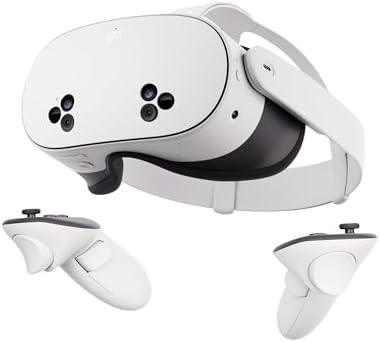
Competitive Positioning: Pricing considerations relative to Meta’s Quest lineup and other emerging competitors.
Bestseller #1

Bestseller #2
Bestseller #3
Target Market Evolution
The Apple Vision Pro 2 launch is expected to target multiple market segments more effectively:
Enterprise Applications: Enhanced productivity features for professional use cases in design, training, and collaboration.
Creative Professionals: Improved tools for 3D modeling, video editing, and creative applications.
Gaming and Entertainment: Better performance for immersive gaming and media consumption experiences.
Education Sector: More accessible pricing and educational-specific features for learning institutions.
Competition and Market Dynamics
The mixed reality landscape continues to evolve rapidly, with the Apple Vision Pro 2 launch occurring in an increasingly competitive environment. Understanding this context is crucial for assessing Apple’s strategy.
Meta’s Quest Ecosystem
Meta continues to dominate the VR market with its Quest lineup, offering significantly more affordable options. The Quest 3, priced at $499-649, has established a strong user base and developer ecosystem. The Apple Vision Pro 2 launch will need to differentiate clearly from these offerings while justifying premium pricing.
Emerging Competitors
Several technology giants are developing competing products:
Google: Rumored to be working on AR glasses and mixed reality solutions Microsoft: Continuing development of HoloLens and mixed reality technologies Samsung: Potential entry into the premium mixed reality market
The Apple Vision Pro 2 launch occurs in this competitive landscape, requiring Apple to demonstrate clear advantages in user experience, ecosystem integration, and technological capabilities.
Developer Ecosystem and App Availability
The success of the Apple Vision Pro 2 launch heavily depends on the availability of compelling applications and experiences. Apple has been investing significantly in building the visionOS developer community.
Current App Ecosystem
The Vision Pro currently supports:
- Over 1.5 million iOS and iPadOS apps in compatibility mode
- Hundreds of native visionOS applications
- Growing library of immersive experiences and games
Expected Improvements for Vision Pro 2
The Apple Vision Pro 2 launch should benefit from:
Expanded Developer Tools: More sophisticated development frameworks and tools for creating immersive experiences.
Enhanced App Store: Better discovery and showcase for mixed reality applications.
Professional Software Support: Improved compatibility with professional creative and productivity applications.
Gaming Platform: Stronger gaming ecosystem with exclusive titles and experiences.
Enterprise and Professional Applications
The Apple Vision Pro 2 launch is expected to place significant emphasis on enterprise and professional use cases, where the premium pricing is more justifiable.
Current Enterprise Adoption
Early Vision Pro adoption in enterprise settings includes:
- Architectural visualization and design reviews
- Training simulations for complex procedures
- Remote collaboration and virtual meetings
- Product development and prototyping
Vision Pro 2 Enterprise Enhancements
The Apple Vision Pro 2 launch may introduce:
Enhanced Collaboration Tools: Better multi-user experiences for team collaboration.
Professional Software Integration: Deeper integration with CAD, 3D modeling, and design applications.
Security Features: Enhanced enterprise-grade security for sensitive business applications.
Management Tools: Better device management capabilities for IT departments.
Manufacturing and Supply Chain Considerations
The Apple Vision Pro 2 launch faces several manufacturing and supply chain challenges that could impact availability and pricing.
Component Sourcing
Key components for the Vision Pro 2 include:
- Advanced micro-OLED displays from specialized suppliers
- Precision sensors for tracking and interaction
- Custom silicon (M5 chip) from Apple’s manufacturing partners
- High-quality optical elements and lenses
Production Scaling
The Apple Vision Pro 2 launch requires Apple to balance several factors:
Quality Control: Maintaining Apple’s premium build quality standards Production Volume: Scaling manufacturing to meet potentially higher demand Cost Management: Optimizing production costs to enable competitive pricing
Software and visionOS Evolution
The Apple Vision Pro 2 launch will likely coincide with major updates to visionOS, Apple’s spatial computing operating system.
Expected visionOS Enhancements
Improved Spatial Interface: More intuitive interactions with virtual objects and interfaces.
Better Hand Tracking: Enhanced accuracy and responsiveness for hand-based interactions.
Enhanced Eye Tracking: More precise eye tracking for navigation and interaction.
Expanded Multitasking: Better support for running multiple applications simultaneously in 3D space.
Integration with Apple Ecosystem
The Apple Vision Pro 2 launch should feature deeper integration with:
- iPhone and iPad applications and data
- Mac connectivity for extended desktop experiences
- Apple Watch integration for health and fitness tracking
- AirPods for enhanced spatial audio experiences
Bestseller #1

Bestseller #2

Bestseller #3

Market Predictions and Industry Impact
The Apple Vision Pro 2 launch is expected to have significant implications for the broader mixed reality market.
Sales Projections
Industry analysts predict the Vision Pro 2 could achieve:
- First-year sales of 1-2 million units (assuming improved pricing and features)
- Stronger enterprise adoption driving consistent demand
- Better international availability expanding market reach
Industry Influence
The Apple Vision Pro 2 launch may catalyze:
- Increased investment in mixed reality content and applications
- More competitive responses from other technology companies
- Broader consumer awareness and interest in spatial computing
- Development of new use cases and applications
Challenges and Potential Obstacles
Despite the excitement surrounding the Apple Vision Pro 2 launch, several challenges remain:
Technical Challenges
Battery Technology: Achieving significantly longer battery life while maintaining portability Display Technology: Further improving visual quality while managing cost and power consumption Processing Power: Balancing performance improvements with heat management and power efficiency
Market Challenges
Price Sensitivity: Finding the right balance between premium positioning and market accessibility Content Availability: Ensuring sufficient compelling content to drive adoption User Education: Helping consumers understand the value proposition of mixed reality
Competitive Pressures
Rapid Innovation: Keeping pace with fast-moving competitors in the mixed reality space Platform Fragmentation: Ensuring visionOS remains competitive with other mixed reality platforms Ecosystem Development: Building and maintaining a thriving developer and content ecosystem
Frequently Asked Questions About Apple Vision Pro 2
When will the Apple Vision Pro 2 launch?
Based on current reports and industry analysis, the Apple Vision Pro 2 launch is expected between fall 2025 and spring 2026. Apple has not officially confirmed this timeline, but multiple credible sources point to this window.
What will be the price of Vision Pro 2?
Apple has not announced Vision Pro 2 pricing. Industry speculation suggests Apple may offer multiple models at different price points, potentially starting below the original Vision Pro’s $3,499 price to expand market accessibility.
What are the key improvements expected in Vision Pro 2?
The most significant expected improvements include the M5 chip for better performance, reduced weight and improved comfort, longer battery life, and enhanced software features through visionOS updates.
Will Vision Pro 2 be compatible with existing Vision Pro apps?
While not officially confirmed, Apple typically maintains backward compatibility for applications. Vision Pro 2 should support existing visionOS apps while potentially offering enhanced features for updated applications.
How will Vision Pro 2 compete with Meta Quest headsets?
The Vision Pro 2 will likely maintain Apple’s premium positioning, focusing on superior build quality, ecosystem integration, and professional applications rather than competing directly on price with Meta’s more affordable Quest lineup.
Bestseller #1

Bestseller #2
Bestseller #3

Conclusion: The Future of Spatial Computing
The Apple Vision Pro 2 launch represents more than just a product update—it’s Apple’s continued commitment to defining the future of spatial computing. While the original Vision Pro established Apple’s presence in mixed reality, the second generation has the potential to truly mainstream the technology.
Success will depend on Apple’s ability to address the first generation’s limitations while maintaining the innovative spirit that made the original Vision Pro remarkable. The combination of improved hardware, refined software, and a growing ecosystem of applications and content creators positions the Apple Vision Pro 2 launch as a pivotal moment in the evolution of mixed reality technology.
As we await official announcements from Apple, the mixed reality industry continues to evolve rapidly. The Apple Vision Pro 2 launch will undoubtedly influence how we interact with digital content, work in virtual environments, and experience entertainment in entirely new ways. For technology enthusiasts, professionals, and consumers interested in the cutting edge of spatial computing, the Vision Pro 2 represents an exciting glimpse into the future of human-computer interaction.
The question isn’t whether the Apple Vision Pro 2 launch will happen, but rather how significantly it will impact our digital lives and reshape the technology landscape. Based on current indicators and Apple’s track record of innovation, the answer appears to be substantially.
iPhone 16 vs Samsung Galaxy S25: Which Flagship Phone Dominates in August 2025?
Top 5 Action Cameras of 2025: Your Ultimate Guide to Capture Every Moment!

NOTE: As an Amazon Associate, We earn from qualifying purchases