We are Reader-supported: We earn commissions through links at no extra cost to you. Details.
Vibe Coding for Beginners
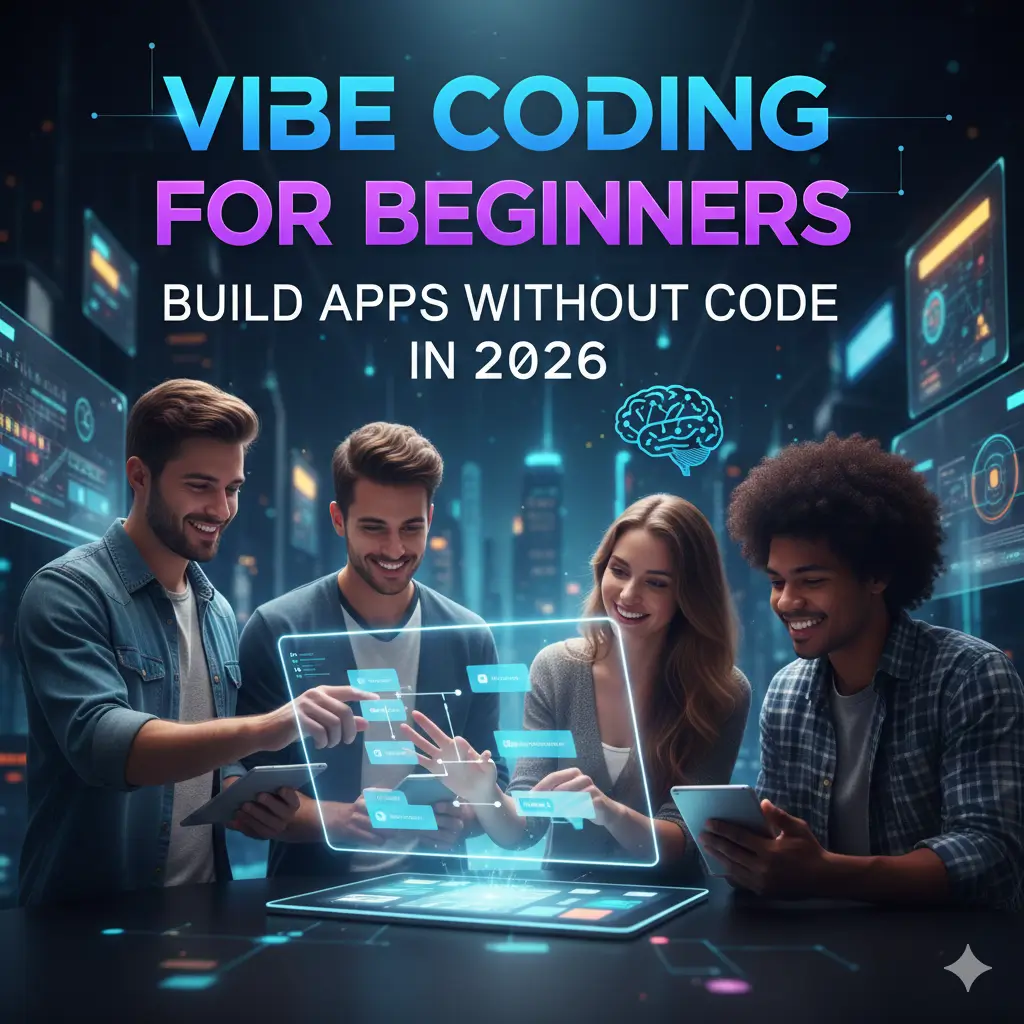
Remember when building an app meant months of learning obscure programming languages, debugging endless lines of code, and understanding complex frameworks? In 2026, that’s as outdated as dial-up internet. Welcome to the era of Vibe Coding – a revolutionary approach where you describe your app idea in plain English, express your “vibe,” and advanced AI models handle the heavy lifting of code generation and deployment.
This isn’t just “no-code” or “low-code”; it’s intent-driven development. It democratizes creation, empowering entrepreneurs, artists, educators, and anyone with an idea to bring their digital visions to life without a single line of traditional code. If you’ve ever dreamt of creating a custom tool, a unique game, or a personal productivity assistant, 2026 is the year your ideas become reality.
What Exactly is Vibe Coding?
Vibe Coding is a new paradigm in software development, powered by highly advanced large language models (LLMs) and specialized code-generation AIs. Instead of writing code, you provide a natural language description of:
- Functionality: “I want an app that tracks my daily water intake.”
- User Experience (UX): “It should have a clean, minimalist interface with a green color scheme.”
- Desired Outcome: “When I hit my goal, it should play a celebratory sound and update a streak counter.”
- Integrations: “It needs to pull weather data from AccuWeather and send daily reminders to my Google Calendar.”
The AI then translates this “vibe” or intent into functional code, building and deploying your application, often across multiple platforms (web, mobile).
Why 2026 is the Breakout Year for Vibe Coding
Several factors converge to make Vibe Coding a game-changer this year:
- Massively Improved LLM Comprehension: Current AI models understand nuanced requests, context, and even emotional tone with unprecedented accuracy.
- Integrated Development Environments (IDEs): AI-powered IDEs now seamlessly generate, test, and refine code based on your descriptions, handling conflicts and optimizing performance.
- Component Libraries & APIs: AIs have access to vast libraries of pre-built UI components and API integrations,allowing them to quickly assemble complex functionalities.
- Specialized AI Agents: Dedicated “coding agents” can interpret your design aesthetics and functional requirements, ensuring the final product matches your vision.
- Cost-Effectiveness: Reduces development time and costs, making custom applications accessible to everyone.
Who Can Benefit from Vibe Coding?
- Entrepreneurs & Startups: Rapidly prototype and launch MVPs (Minimum Viable Products) without hiring expensive dev teams.
- Small Business Owners: Create custom CRM tools, inventory trackers, or client portals tailored precisely to your unique needs.
- Educators: Develop interactive learning tools, personalized quizzes, or engaging simulations for students.
- Creatives: Build unique portfolios, interactive art installations, or niche content platforms.
- Everyday Users: Design personal productivity apps, family chore trackers, or specialized hobby loggers.
- Career Changers: Develop a portfolio of functional apps without traditional coding background, demonstrating problem-solving and ideation skills.
Getting Started with Vibe Coding: A Step-by-Step Guide
Here’s how to begin your Vibe Coding journey in 2026:
Step 1: Define Your Vision (The “Vibe”)
- What Problem Does It Solve? Clearly articulate the purpose of your app.
- Who is Your User? Describe the target audience and their needs.
- Key Features: List the essential functions. What absolutely must it do?
- Desired Look & Feel: Describe the aesthetics, color palette, and overall user experience.
- Input & Output: What information does the app take in, and what does it produce?
Example Vibe: “I need a simple web app for my gardening club. It should allow members to log when they planted specific seeds, track growth with daily notes, and upload one photo per entry. It needs a shared calendar for watering schedules and events. The design should be earthy, calm, and very easy to use for all ages.”
Step 2: Choose Your Vibe Coding Platform
In 2026, several platforms offer robust Vibe Coding capabilities. Look for:
- Natural Language Interface: Can you truly describe your app in conversational English?
- Multi-Platform Output: Does it generate web, iOS, and Android versions?
- Integration Capabilities: Can it connect to common APIs (Google Sheets, Stripe, Twilio)?
- Versioning & Iteration: Can you easily make changes and revert if needed?
- Deployment Options: How easy is it to launch your app?
Popular Platforms (as of 2026): [Placeholder for specific platform names, e.g., “MetaCanvas,” “Google DevFlow,” “OpenAI DevStudio” – research current leading platforms]
Step 3: Start Vibing! (Iterative Prompting)
- Initial Prompt: Feed your detailed vision into the Vibe Coding platform.
- Review & Refine: The AI will generate an initial version. Test it. Does it match your intent?
- Iterate with Feedback: Provide specific instructions for changes: “Make the ‘Add Entry’ button larger,” “Change the calendar view to a weekly layout,” “Integrate a push notification for watering reminders.”
- Test and Optimize: Continuously test the user experience and functionality.
Example Prompt Iteration:
- You: “Build me a simple gardening club web app. Members log seed plantings, track growth with notes and photos.Shared calendar for events. Earthy, calm design, easy for all ages.”
- AI: Generates initial web app structure.
- You: “Looks good, but the photo upload isn’t working on mobile. Also, add a ‘Plant Species’ dropdown with common vegetables and herbs.”
- AI: Updates the app, fixes mobile upload, adds dropdown.
Step 4: Deploy and Share
Once satisfied, the platform will guide you through deployment. You’ll typically get a web link, and potentially app store submission guides for mobile versions.
The Future is Vibe-Coded
Vibe Coding is more than a trend; it’s a fundamental shift in how we interact with technology. It reduces barriers to entry,fosters innovation, and allows more people to become creators in the digital world. Stop dreaming about your ideal app and start “vibing” it into existence.
Ready to try your hand at Vibe Coding? Pick a small project, describe your vision, and see what the AI can create for you!
Further Reading:
- https://ustopreviews.com/2026-ai-first-productivity-playbook/The 2026 AI-First Productivity Playbook: Master Your Time, Multiply Your Impact

- https://ustopreviews.com/best-ai-financial-agents-2026-guide/Best AI Financial Agents 2026: Your Personal Money Manager
Bestseller #1
Bestseller #2
Bestseller #3
⭐ Customer Ratings
0 out of 5 stars (based on 0 reviews)
📝 Leave Your Review
📌 All Customer Reviews
There are no reviews yet. Be the first one to write one.
NOTE: As an Amazon Associate, We earn from qualifying purchases